Description
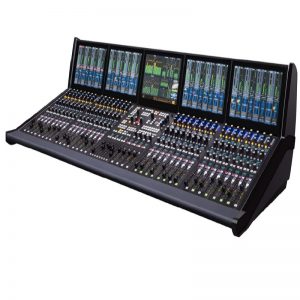
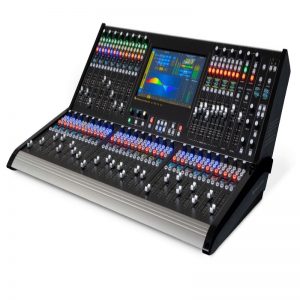
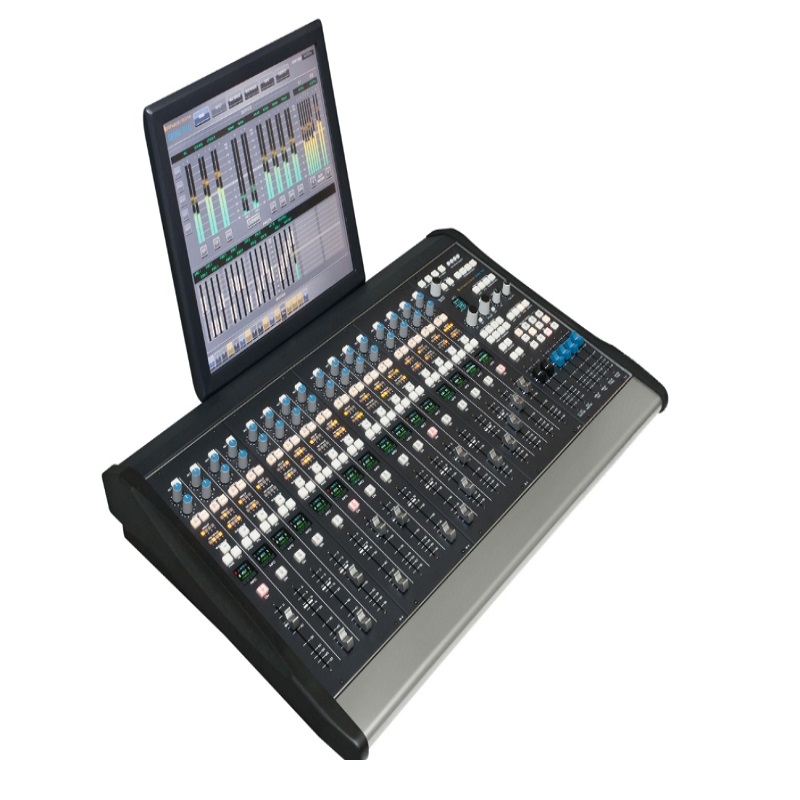
The Series Four/Series Two is made to work with todays production automation systems, yet has all the important features for live broadcast operations with a size and feel ideal for small studios or OB or ENG vans. Both feature a PAGE function for doubling the number of channels in the same footprint.
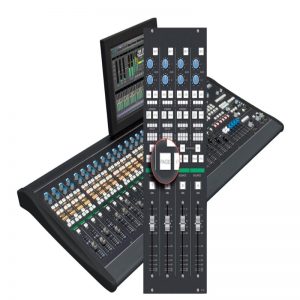
The Series Four features 24 motorized input faders (the Series Two features 16 on a smaller frame), two main mix busses, four subgroups, up to 48 channel mix-minuses, four mix minus busses, and two AUX sends, plus extensive processing. All input channels have 4-band parametric EQ sections, tunable high and low pass filters, and compressor/limiters, plus expander/gate and programmable delay for lip-sync correction.
And unlike sound reinforcement consoles, these consoles each offer a direct bus-minus feed with IFB from each channel plus four front panel assignable mix-minus busses. With a possible total of 52 outputs, all IFB needs should be more than covered, and the common bus selection function provides tremendous flexibility in how IFB is managed.
Through our Automation Control Interface (ACI), the Series Four and Series Two integrate seamlessly with production automation systems so operators can, for example, change routing or automatically crossfade between inputs as the switcher or automation system cuts or dissolves between video sources. Faders can be mono, stereo or surround. Whats more, all the mixes generated by the Series Four and Series Two can be routed to any available outputs on the audio network, including input faders on other network-connected control surfaces. Assign any source of any type to any fader, and share I/O resources with other consoles in the network. Its all networked through Wheatstones Gibraltar Network system, utilizing Wheatstones powerful Gibraltar mix engine technology with 1,024 DSP processing signal paths. This kind of power and modular flexibility provides the extra redundancy that is so critical to broadcast operations, with auto-failover DSP processing on the board and the kind of I/O connectors that stand up to the broadcast environment, not to mention easy touchscreen setup.
These consoles can take it all in analog, AES, MADI and HD/SDI input signals and deliver any source or console bus to any destination in the broadcast network. Operators will be able to see it all, too, on a large, high-resolution multifunction touchscreen display for capturing information at a glance: metering, channel/bus assignments, and programmable control functions. A LKFS meter for loudness monitoring is also included in the main display.
Because Series Four and Series Two are networked consoles, you can:
Assign any source of any type to any fader
Hot-swap components without powering down or disassembling
Share I/O with other networked control surfaces
Control the consoles over IP with any of the major newsroom automation systems
Switch live, on the fly or between air and protect sources on the same fader
Utilizing the Wheatstone Gibraltar Network audio networking technology, the Series Four and Series Two can be configured with any combination of analog and digital inputs. Those inputs can be mono mic or line, stereo, or 5.1. Stereo and 5.1 surround output busses allow you to feed both your HD and SD program streams with no fuss.